
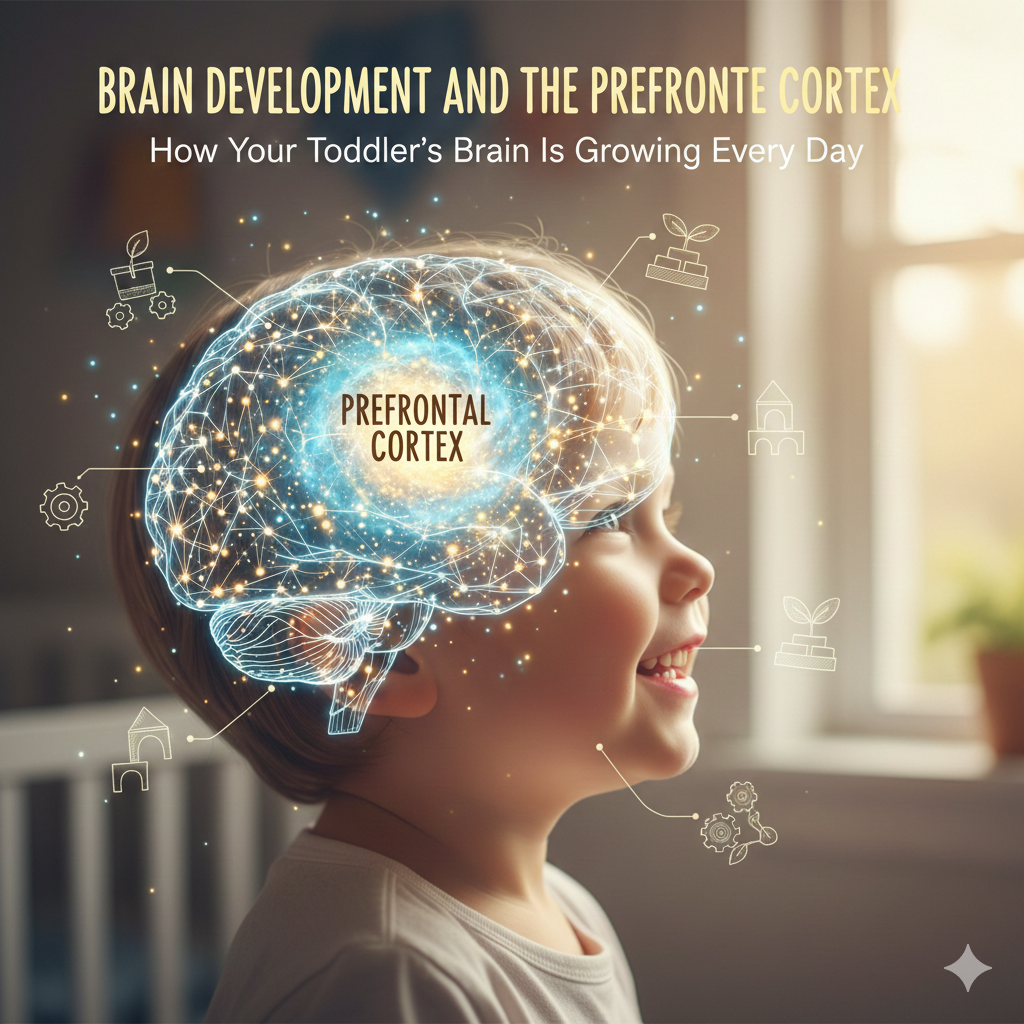
If you have a toddler at home, you’ve probably wondered:
“Why does my child act before thinking?”
“Why is sharing so hard?”
“Why do tantrums happen so suddenly?”
The answer lies in your toddler’s growing brain—especially a part called the prefrontal cortex.
Let’s understand what it is, why it matters, and how you can support your toddler’s brain development in simple, loving ways.
What Is the Prefrontal Cortex?
The prefrontal cortex is the front part of the brain. Think of it as your child’s “thinking and control center.”
This part of the brain helps with:
- Making choices
- Controlling emotions
- Waiting and taking turns
- Understanding rules
- Paying attention
The important thing to know is this:
👉 The prefrontal cortex is still under construction in toddlers.
In fact, it continues developing well into the teenage years and even adulthood.
Why Toddlers Act on Feelings, Not Logic
Toddlers feel emotions very strongly, but they don’t yet have the brain power to manage them.
That’s because:
- The emotional brain (like the amygdala) develops early
- The prefrontal cortex develops slowly
So when your toddler is tired, hungry, or frustrated, emotions take over—before thinking has a chance to step in.
This is why toddlers:
- Have meltdowns
- Struggle to share
- Say “no” a lot
- Act impulsively
It’s not bad behavior—it’s brain development in progress.
How the Prefrontal Cortex Develops in Toddlers
During toddlerhood, the brain is making millions of connections every day. Each loving interaction helps strengthen the prefrontal cortex.
Your toddler’s brain grows through:
- Repetition
- Safe routines
- Emotional connection
- Play
- Calm guidance
Every time you help your child calm down or make a choice, you’re helping build their thinking brain.
Simple Ways Parents Can Support Brain Development
You don’t need special tools or programs. Small daily actions make a big difference.
1. Name Feelings
Say things like:
- “You’re feeling angry.”
- “That made you sad.”
This helps toddlers slowly learn emotional control.
2. Offer Simple Choices
Instead of commands, try:
- “Red cup or blue cup?”
- “Walk or hold hands?”
Choices strengthen decision-making skills.
3. Keep Routines Predictable
Consistent routines help toddlers feel safe and in control—key for brain development.
4. Stay Calm During Tantrums
Your calm brain helps regulate your child’s developing brain.
5. Play Every Day
Pretend play, puzzles, stacking blocks, and storytelling all support the prefrontal cortex.
What Not to Expect from Toddlers
It’s important to have realistic expectations.
Toddlers are not yet able to:
- Control impulses all the time
- Think logically when upset
- Calm themselves without help
They need co-regulation—your support—to learn these skills over time.
The Big Picture: Building the Brain with Love
Your toddler’s prefrontal cortex grows best in an environment filled with:
- Patience
- Connection
- Gentle boundaries
- Repetition
Every time you guide instead of punish, explain instead of shout, and comfort instead of ignore, you are shaping your child’s brain for the future.
Final Thought for Parents
Your toddler isn’t giving you a hard time—they’re having a hard time.
Their brain is learning, growing, and trying its best.
And with your love and support, their thinking brain will get stronger—one day at a time 💛
Leave a Reply