
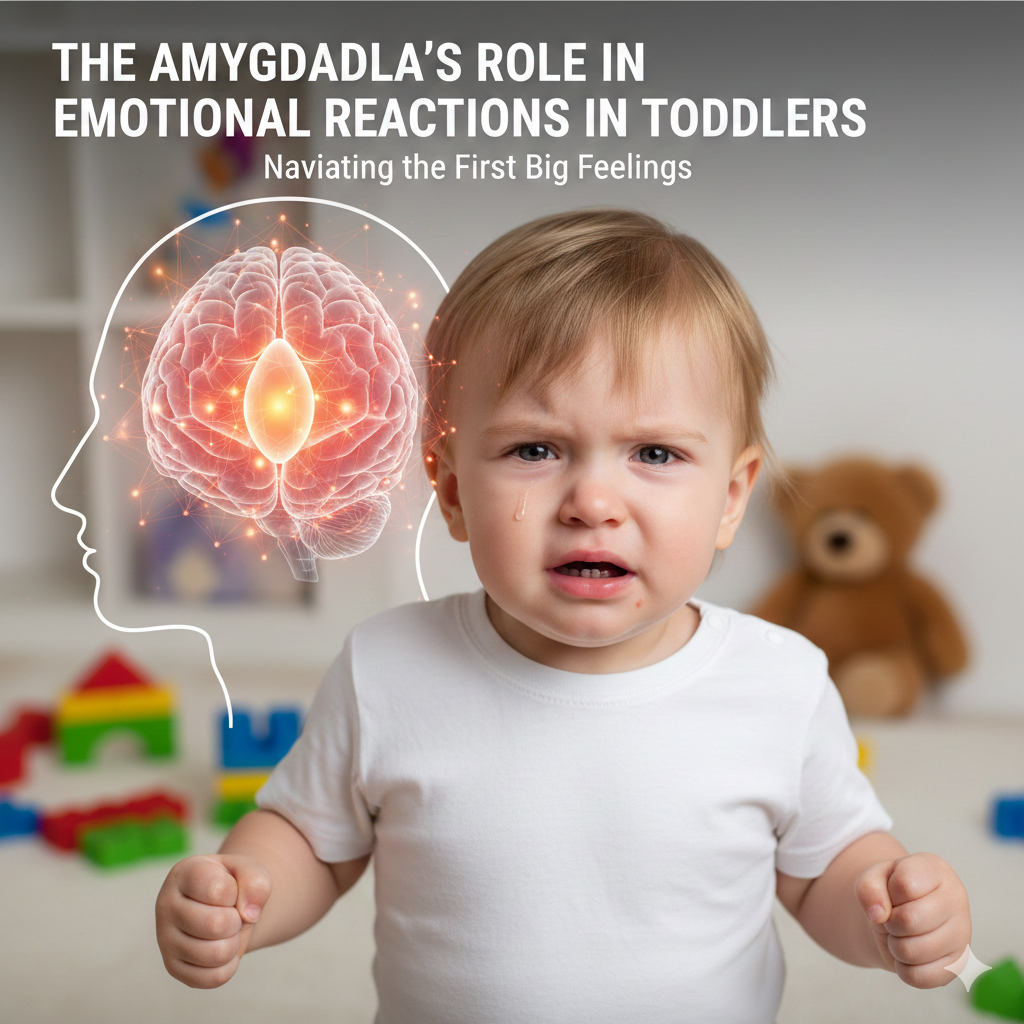
A small part of the brain called the amygdala plays a big role in toddler’s emotional reactions.
If you have a toddler, you’ve probably seen sudden crying, fear, anger, or big meltdowns that seem to come out of nowhere. One moment your child is calm, and the next they are screaming or scared.
This is not bad behavior — it’s your toddler’s brain at work.
A small part of the brain called the amygdala plays a big role in these emotional reactions.
What Is the Amygdala?
The amygdala is a tiny part of the brain that helps toddlers feel and react to emotions like:
- Fear
- Anger
- Excitement
- Anxiety
Think of the amygdala as your toddler’s emotional alarm system. Its main job is to keep them safe.
Why Toddlers React So Strongly
In toddlers, the amygdala is very active, but the part of the brain that helps with self-control and calm thinking (called the prefrontal cortex) is not fully developed yet.
This means:
- Toddlers feel emotions very strongly
- They cannot yet explain how they feel
- They react before thinking
That’s why small things can lead to big reactions.
Everyday Examples of the Amygdala in Toddlers
You can see the amygdala at work when:
- Your toddler cries when a stranger comes close
- They get scared of loud noises or dark rooms
- They throw a tantrum when a toy is taken away
- They panic when routines change suddenly
Their amygdala thinks: “Something is wrong! I need to react NOW!”
Tantrums Are Not Bad Behavior
When a toddler has a meltdown, it’s usually because:
- Their amygdala feels overwhelmed
- They don’t yet know how to calm themselves
- They need help, not punishment
Your toddler is not trying to be difficult — their brain is still learning.
How Parents Can Help Calm the Amygdala
Parents play a very important role in helping toddlers feel safe and calm.
Here’s what helps:
1. Stay Calm Yourself
Your calm voice and body language tell your toddler’s brain that they are safe.
2. Name the Feeling
Say simple words like:
- “You feel scared.”
- “You are angry.”
This helps your toddler slowly learn emotional understanding.
3. Offer Comfort
Hugs, holding hands, or sitting close can quickly calm the amygdala.
4. Keep Routines
Predictable routines make toddlers feel secure and reduce emotional reactions.
5. Give Time
Toddlers need time to calm down. Don’t rush them.
The Good News
As toddlers grow, their brain develops better emotional control. With love, patience, and guidance, their amygdala learns that the world is a safe place.
Every calm response you give is helping shape your child’s emotional future.
Final Thoughts
Big emotions in toddlers are normal. Understanding the amygdala helps parents respond with empathy instead of frustration. When we support our toddlers during emotional moments, we help them build strong emotional skills for life.
Leave a Reply